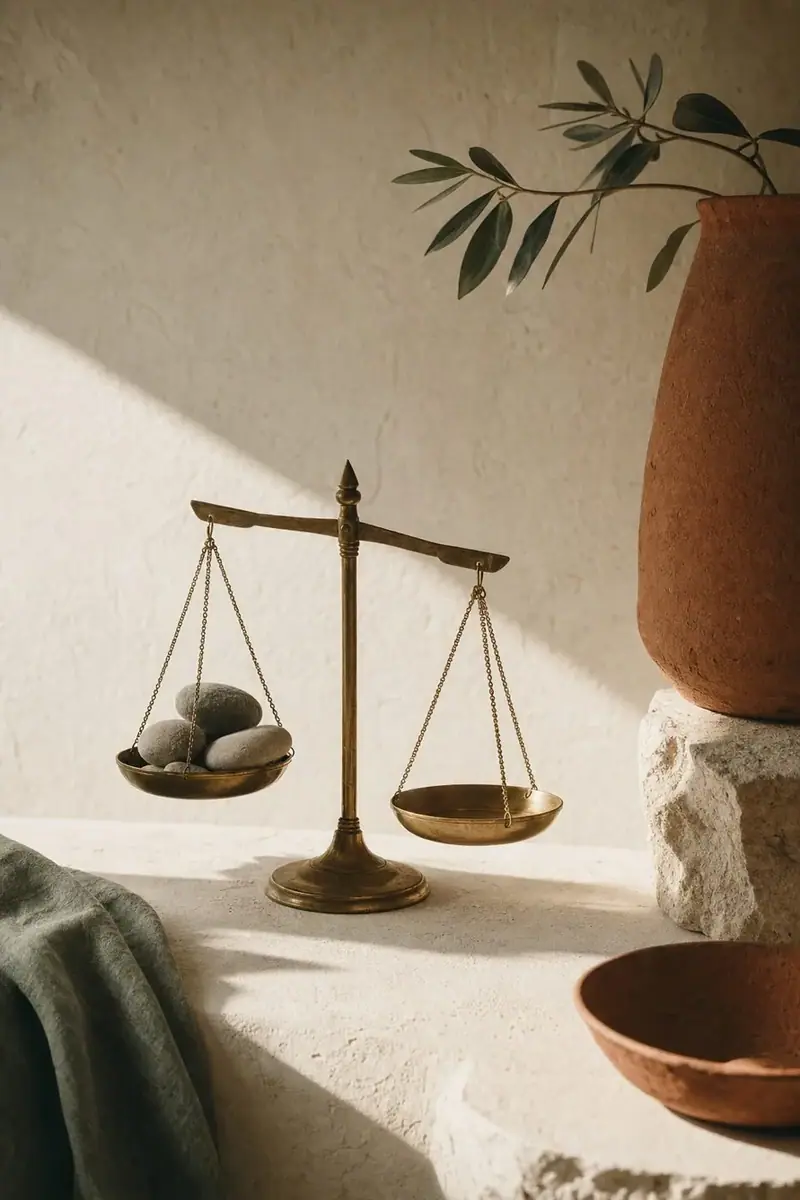
I used to think self-doubt was one big weather system. Then I started writing down what I was actually thinking when it hit, and it turned out to be four holes. The same four. On rotation, for years.
Naming them didn't cure anything. It did something better. It made them recognisable, and a hole you can recognise is much harder to fall into by accident.
Pit one: overthinking
It looks like diligence. One more comparison, one more search, one more opinion, and then I'll decide. But I'm not gathering information. I'm looking for a guarantee, and there isn't one.
The tell: I already know the answer and I'm still researching.
The reframe: most decisions are reversible and cheap. Make it, watch what happens, adjust. That's not recklessness. That's the actual method.
 Squarespace vs. Shopify for Creative Businesses in 2026
Pit two: comparison
Someone else's finished thing against my unfinished everything. I wrote a whole post about the year-one problem because this pit is deep enough to deserve one.
The tell: I feel behind but couldn't say behind WHAT.
The reframe: under every comparison is something I want. Name the want and it becomes a plan instead of an ache.
The pits don't get shallower. You just get faster at noticing which one you're in.
Pit three: the credential trap
The belief that I need one more qualification, one more course, one more year before I'm allowed to charge properly or speak up. It feels humble. It functions as a delay.
The tell: I'm buying another course instead of doing the work I already know how to do.
The reframe: the people I trust most are the ones who tell me what happened to them, not the ones with the longest list of letters. Experience is a credential. Yours counts.
Pit four: the retrospective rewrite
This is the sneakiest. A client says yes or a post lands, and within a day I've explained it away. Lucky timing. They were being kind. Anyone could have done that.
The tell: I can list my failures in order and can't remember last month's win.
The reframe: write the wins down when they happen, in a place you'll find later. Memory is a biased narrator and it does not edit in your favour.
The question that works on all four
One question, and it isn't clever: what's the smallest true next step?
Smallest, so it fits inside a bad day. True, so it can't be busywork. Next, so it isn't a plan.
Overthinking a price? The step is to write one number down. Comparison spiral? The step is to close the app and send one invoice. Credential trap? Do the work once, unqualified, and see. Rewriting a win? Type the sentence in your notes app right now, with today's date on it.
The pits are still there. I fell into pit two the Tuesday before I wrote this. The difference is that I recognised it in about ten minutes rather than losing the day to it, and ten minutes is a life I can live with.
If you only keep four things
- Self-doubt is repetitive. Name your specific pits and they lose their disguise.
- Overthinking is fear asking for more information it won't use.
- Comparison is a want in disguise. Find the want.
- Ask: what's the smallest true next step? Then take it before you feel ready.
Name your four this week. Mine won't be yours. Then ask the question and take the small step before you feel ready.
Leslieann